The Rise of Mobile-First Design in Austria's Licensed Virtual Casino Landscape
Sam Powell · Sep 28, 2026

The Rise of Mobile-First Design in Austria's Licensed Virtual Casino Landscape
Data from recent market analyses shows that mobile devices now account for the majority of interactions with licensed virtual casinos among Austrian residents, a shift driven by widespread smartphone adoption and evolving platform capabilities. Observers note that this trend has accelerated since regulatory frameworks stabilized in the mid-2020s, with figures revealing consistent growth in mobile session lengths and transaction volumes through 2026.
Device Usage Patterns Among Austrian Players
Statistics compiled by Austrian regulatory bodies indicate that over 70 percent of visits to licensed virtual casino sites originate from mobile devices as of September 2026, while desktop access has declined steadily over the preceding three years. Researchers tracking user behavior have identified clear preferences for touch-optimized interfaces that support quick loading times and intuitive navigation, especially during short daily sessions. Those who have studied these patterns point to seamless integration with local payment systems as a key factor sustaining high engagement levels on smaller screens.
Experts from European research institutions have documented how mobile-first development allows platforms to meet strict licensing requirements for responsible gaming tools without compromising accessibility. Data shows that push notifications and location-based features, when implemented within regulatory bounds, help maintain player awareness of time and spending limits across devices.
Interface Adaptations and Technical Developments
Platform operators have responded by prioritizing responsive design elements that scale content dynamically, ensuring that game lobbies, account management sections, and support features remain fully functional regardless of screen size. Studies conducted by academic teams at Austrian universities reveal that players complete registration and verification processes faster on mobile when forms adapt automatically to device orientation and input methods. This approach reduces friction while preserving compliance with identity verification standards mandated under national licensing rules.
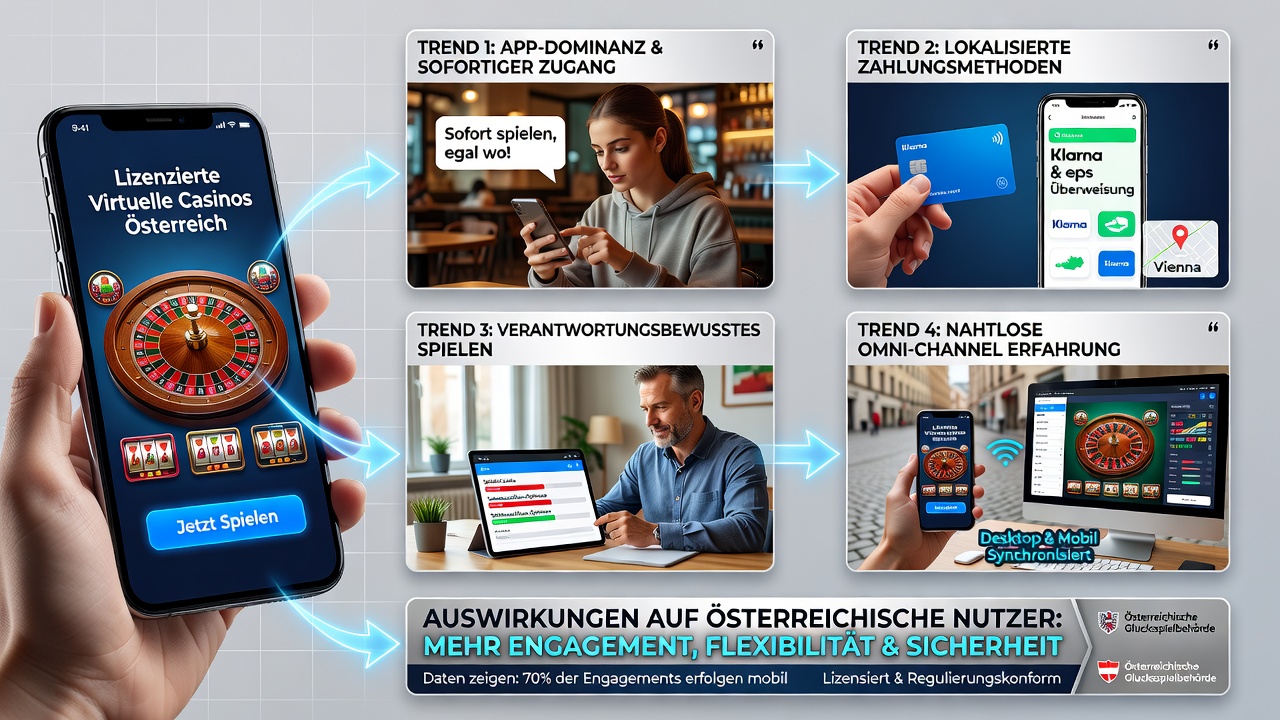
Industry reports from organizations such as the European Gaming and Betting Association highlight how progressive web applications have gained traction in Austria because they combine app-like performance with browser-based updates that avoid lengthy installation processes. Those monitoring adoption rates note that these applications support offline caching for certain non-game elements, which proves useful in regions with variable network coverage.
Security Protocols and Regulatory Compliance on Mobile
Security measures tailored for mobile environments include biometric authentication options and encrypted data transmission protocols that align with EU-wide data protection directives. Figures released by oversight agencies show that licensed operators in Austria report lower incident rates for mobile sessions when multi-factor verification is enabled by default. Researchers examining compliance data emphasize that real-time monitoring tools integrated into mobile dashboards allow both players and regulators to track activity patterns without requiring separate desktop access.
Analyses from international bodies, including reports referenced by the International Association of Gaming Regulators, confirm that Austria's licensing system incorporates mobile-specific testing protocols to verify fair play algorithms and transaction security before platforms receive approval. These requirements ensure that virtual casino environments remain consistent across devices while meeting localized standards for player protection.
Behavioral Shifts and Session Characteristics
Evidence gathered through anonymized usage logs indicates that Austrian players tend toward shorter, more frequent mobile sessions compared with longer desktop engagements recorded in earlier years. Observers tracking these changes note that features such as one-tap game resumption and integrated chat support contribute to sustained activity levels without encouraging extended continuous play. Data from September 2026 surveys reveals that mobile users access a broader range of game categories per session, often switching between slots, table games, and live dealer options within single visits.
Case studies compiled by gaming research centers demonstrate that mobile-first platforms facilitate easier access to self-exclusion tools and deposit limit settings, which players can adjust directly from their devices during active sessions. This accessibility aligns with broader European efforts to embed responsible gaming mechanisms into everyday platform use.
Conclusion
Trends observed through 2026 demonstrate that mobile-first strategies have become central to how licensed virtual casinos operate within Austria's regulatory environment. Platform adaptations continue to evolve in response to device usage data and compliance requirements, while maintaining the security and transparency standards expected under national licensing. Those following these developments report that ongoing refinements in interface design and technical infrastructure support consistent player engagement across the range of available mobile technologies.